Starting skincare can feel overwhelming. One of the first decisions beginners face is whether to use fragrance-free skincare or fragranced skincare products.
At Hollyberry Cosmetics, we regularly hear from customers who switched to fragrance-free serums after experiencing irritation, redness, or breakouts from heavily scented products. Many beginners assume fragrance means “better quality” or “more luxurious,” but in reality, fragrance can sometimes create problems for sensitive or compromised skin.
That does not mean all fragranced skincare is bad. Some people enjoy the sensory experience and never experience irritation. The key is understanding how fragrance affects the skin and choosing products that match your skin type and skincare goals.
This guide explains everything beginners need to know.
Summary
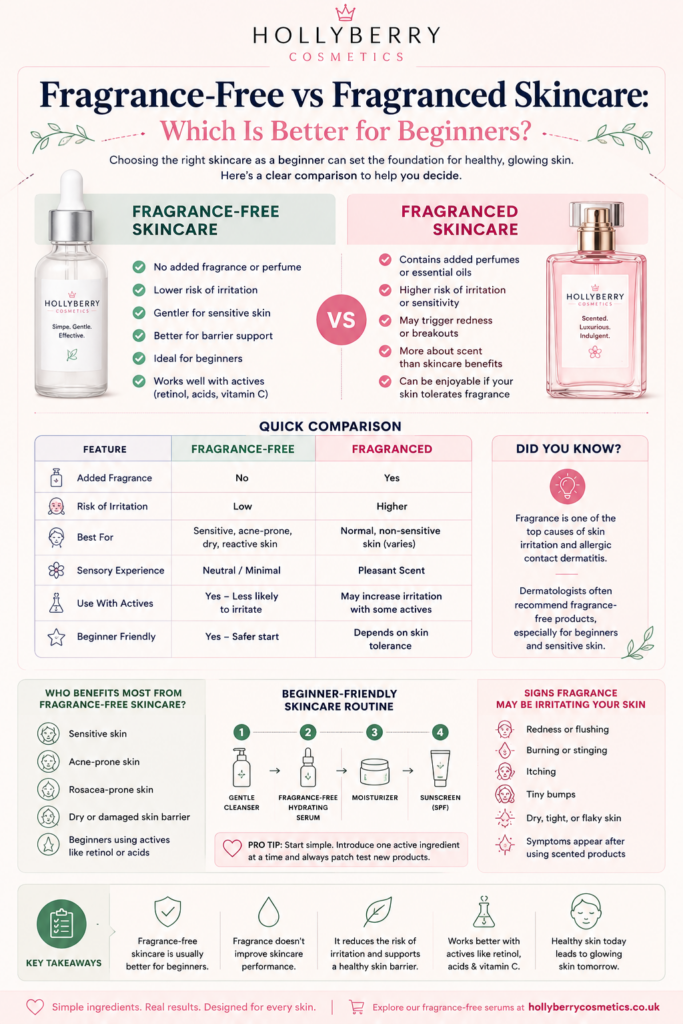
What is fragrance-free skincare?
Fragrance-free skincare contains no added fragrance ingredients designed to create scent. Products may still have a natural smell from their raw ingredients.
What is fragranced skincare?
Fragranced skincare contains added fragrance compounds or essential oils to create a pleasant scent.
Which is better for beginners?
For most beginners, fragrance-free skincare is usually the safer option because it reduces the risk of irritation, sensitivity, and allergic reactions.
Who benefits most from fragrance-free skincare?
- Sensitive skin
- Dry or damaged skin barriers
- Acne-prone skin
- Rosacea-prone skin
- Beginners using active ingredients like retinol or acids
Can fragranced skincare cause irritation?
Yes. Fragrance is one of the most common causes of cosmetic skin irritation and allergic contact dermatitis.
Does fragrance improve skincare performance?
No. Fragrance mainly improves sensory experience, not skincare effectiveness.
What Does “Fragrance-Free” Actually Mean?
Fragrance-free skincare products are made without added fragrance ingredients intended to perfume the formula.
This is important because many skincare reactions are linked to fragrance compounds rather than the active ingredients themselves.
A product can still smell slightly natural because raw ingredients often have their own scent. For example:
- Vitamin C can smell slightly metallic
- Hyaluronic acid formulas may smell neutral or slightly clinical
- Botanical extracts may have a mild earthy scent
At Hollyberry Cosmetics, we focus heavily on minimalist formulas because beginners often react better to simple ingredient lists without unnecessary fragrance oils.
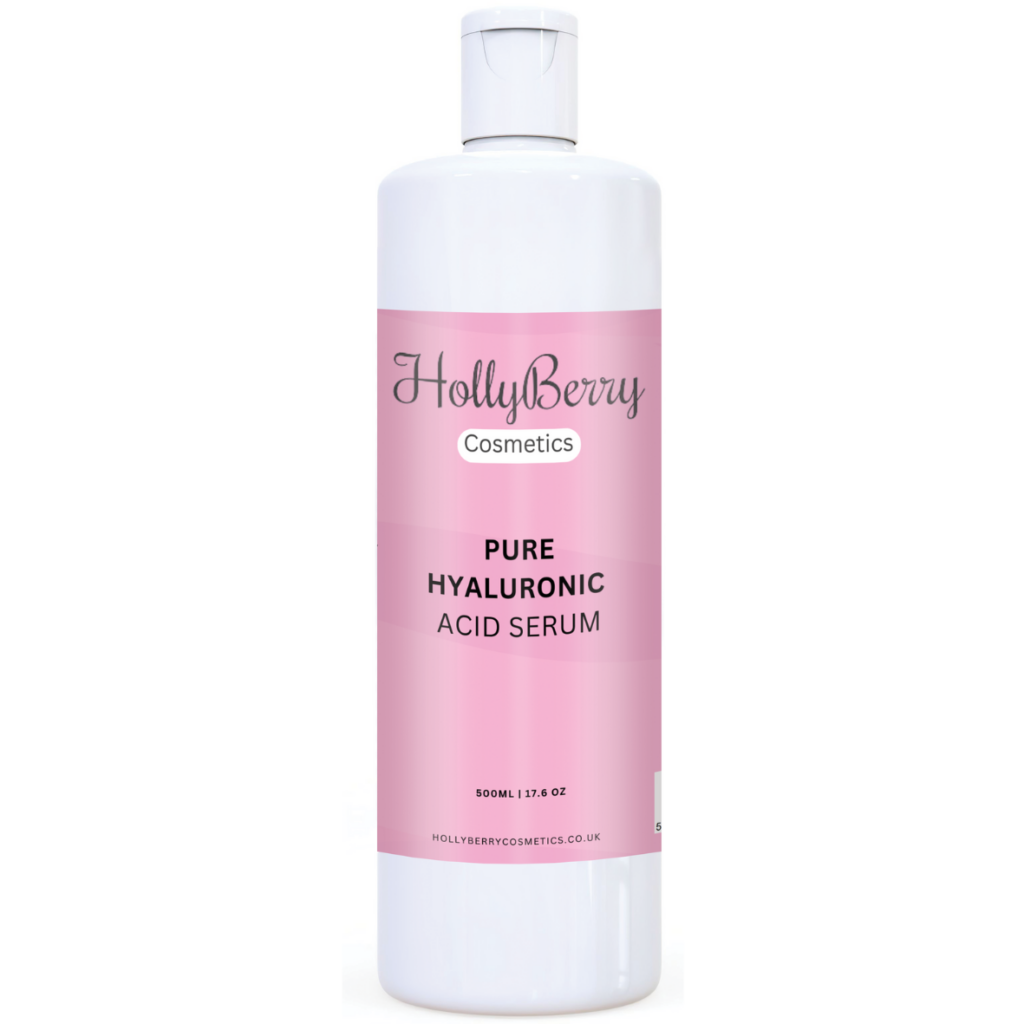
For example, our Hyaluronic Acid Serum is fragrance-free and designed to focus purely on hydration without unnecessary fillers or perfumes.
Pro Tip
If your skin often feels tight, itchy, or red after skincare, fragrance may be contributing to the irritation — especially if you are new to active ingredients.
What Is Fragranced Skincare?
Fragranced skincare includes added perfumes, essential oils, or aromatic compounds designed to improve the product’s scent.
Common fragrance ingredients include:
- Parfum
- Limonene
- Linalool
- Citral
- Essential oils
- Floral extracts
Some luxury skincare brands use fragrance to create a spa-like experience. This can make products feel more premium or enjoyable to use.
However, fragrance does not improve hydration, anti-ageing effects, or acne treatment results.
Fragrance-Free vs Fragranced Skincare: Quick Comparison
| Feature | Fragrance-Free Skincare | Fragranced Skincare |
|---|---|---|
| Added perfume ingredients | No | Yes |
| Better for sensitive skin | Usually | Sometimes problematic |
| Lower irritation risk | Yes | No |
| Better for beginners | Usually yes | Depends on skin tolerance |
| Sensory experience | Neutral | Stronger |
| Suitable with retinol/acids | Yes | Can increase irritation |
| Risk of allergic reactions | Lower | Higher |
Why Beginners Often Do Better With Fragrance-Free Skincare
When someone first starts skincare, their skin barrier is often already compromised from:
- Over-cleansing
- Scrubs
- Acne treatments
- Harsh soaps
- Environmental stress
- Mixing too many products
Adding fragrance on top can increase irritation.
One thing we have noticed firsthand at Hollyberry Cosmetics is that beginners who simplify their routines often see improvements faster than those using highly perfumed products with long ingredient lists.
Especially when using ingredients like:
- Retinol
- Salicylic acid
- Vitamin C
- Niacinamide
- Exfoliating acids
Fragrance-free formulas are generally easier for the skin to tolerate.
Our Retinol Serum and Vitamin C & Hyaluronic Acid Serum are both designed without added fragrance to help reduce unnecessary irritation.
Pro Tip
If you are starting retinol for the first time, avoiding fragranced skincare around it can significantly reduce stinging and redness.
ORDER OUR HYALURONIC ACID SERUM HERE
Can Fragrance Cause Breakouts?
For some people, yes.
Fragrance itself is not technically acne-causing, but irritation can trigger inflammation that worsens breakouts.
This is especially common in:
- Acne-prone skin
- Oily skin with sensitivity
- Over-exfoliated skin
- Teen skin
- Skin using acne treatments
We often see customers mistake irritation bumps for acne when the real issue is overuse of fragranced products combined with strong actives.
Is Fragranced Skincare Ever Good?
Fragranced skincare is not automatically bad.
Some people:
- Enjoy the experience
- Associate scent with relaxation
- Have skin that tolerates fragrance well
- Prefer luxurious textures and aromas
If your skin is healthy and non-sensitive, fragranced skincare may not cause any issues.
The problem is that beginners often do not know their skin sensitivity level yet.
That is why fragrance-free products are usually the safer starting point.
Pro Tip
If you love fragranced skincare, try limiting fragrance to cleansers or wash-off products rather than leave-on serums.
Fragrance-Free Skincare and the Skin Barrier
The skin barrier is your skin’s protective outer layer.
When damaged, you may experience:
- Dryness
- Tightness
- Burning
- Redness
- Flaking
- Increased sensitivity
Fragrance can sometimes worsen barrier damage because certain aromatic compounds are naturally irritating to sensitive skin.
Minimalist skincare routines are often best for rebuilding the skin barrier.
This is one reason simple hydration-focused products like Niacinamide Serum with Hyaluronic Acid and hyaluronic acid serums are popular with beginners.
How to Tell if Fragrance Is Irritating Your Skin
Signs of fragrance sensitivity include:
- Red patches
- Burning after application
- Itchy skin
- Random irritation
- Stinging near the eyes
- Flushing
- Tiny bumps
Symptoms may appear immediately or after repeated use over weeks.
One common mistake beginners make is blaming active ingredients when fragrance is actually the trigger.
Best Skincare Approach for Beginners
For most beginners, the best approach is:
- Start with fragrance-free basics
- Keep routines simple
- Introduce one active ingredient at a time
- Focus on hydration and barrier support
- Patch test new products
A simple beginner routine could include:
- Gentle cleanser
- Fragrance-free hydrating serum
- Moisturizer
- SPF
Once your skin becomes more stable, you can experiment carefully if desired.
Pro Tip
Changing too many products at once makes it difficult to identify what is irritating your skin.
Key Takeaways
- Fragrance-free skincare is usually better for beginners
- Fragrance does not improve skincare performance
- Sensitive or acne-prone skin often reacts better to fragrance-free formulas
- Fragrance can increase irritation when combined with retinol or acids
- Minimalist skincare routines are often easier for beginners to tolerate
- Fragranced skincare is not always harmful, but it carries a higher risk of irritation
FAQ
Is fragrance-free skincare better for sensitive skin?
Yes. Fragrance-free skincare generally reduces the risk of irritation and allergic reactions.
Can fragrance damage the skin barrier?
For some people, yes. Fragrance can worsen sensitivity and inflammation in compromised skin.
Is natural fragrance safer than synthetic fragrance?
Not always. Essential oils and natural fragrances can still irritate sensitive skin.
Why do dermatologists often recommend fragrance-free products?
Because fragrance is one of the most common skincare irritants.
Can I use fragranced skincare with retinol?
You can, but it may increase irritation, dryness, or redness.
Does fragrance-free skincare work better?
Not necessarily better, but often gentler and easier for beginners to tolerate.
Is fragrance-free skincare boring?
No. Many fragrance-free products focus more on skin performance rather than scent.
Final Thoughts From Hollyberry Cosmetics
At Hollyberry Cosmetics, we believe beginners usually benefit most from simple, fragrance-free skincare routines focused on hydration and barrier support rather than strong scents or overly complicated formulas.
Many customers are surprised by how much calmer their skin becomes once they remove unnecessary fragrance from their routine.
Skincare does not need to smell strong to work well. Often, the gentlest routines are the most effective long-term